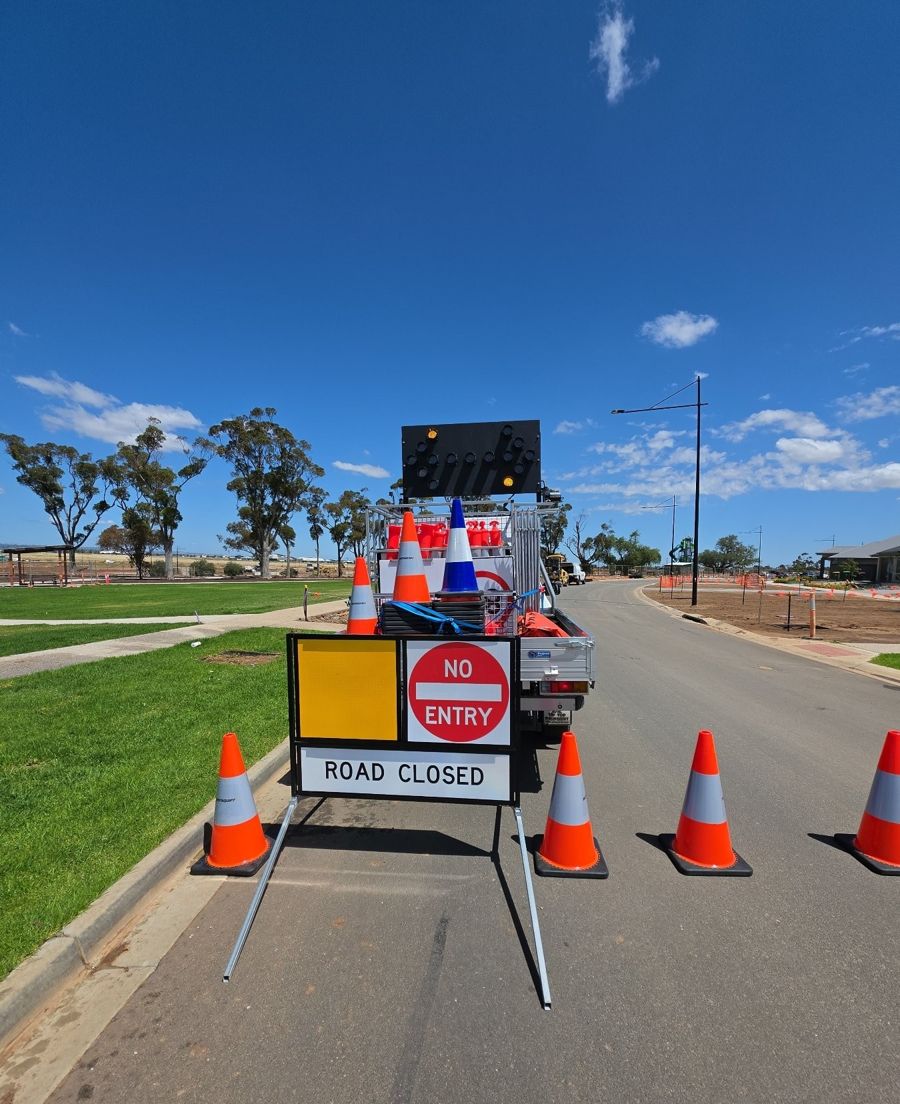
Who needs one
Under the Road Traffic Act 1961, nobody can put out signs, cones or other traffic control devices for work on a road without the Minister's approval. On state roads that approval comes from DIT's Traffic Management Centre (TMC). The SA Standards for Workzone Traffic Management say notification is needed for roadwork "on, along, adjacent or across any road pavement or shoulder" maintained by the Commissioner of Highways or prescribed by regulation. If your job needs a lower speed limit or a lane change, that permit is issued as part of the same approval.
Is it a DIT road or a council road?
It depends on who manages the road, not how busy it is. Most major arterial roads are DIT roads. Local streets usually belong to the council. Two ways to check:
- SA.GOV.AU keeps a list of who is responsible for which roads.
- The State Managed Roads layer on the Location SA map viewer shows the roads DIT controls.
Not sure? Send us the address and we will check it.
What you need to apply to DIT
- Portal access. Applications go through the DIT Roadworks portal at roadworks.sa.gov.au. DIT says you need a current workzone traffic management card to get access, and new users apply by sending the New User Application Form to [email protected].
- A traffic management plan and traffic guidance scheme. The application must include a TMP and a TGS showing where every traffic control device goes and when traffic will be restricted. See what a TGS is.
- Enough notice. The approval has to be in hand at least three working days before work starts. If your job digs, drills or cuts the road surface, we ask for five business days so there is time for DIT's questions.
- Bigger projects. If you are excavating and restoring an arterial road pavement, the DIT Specification for Work on Roads by Other Organisations applies. Building a new access onto an arterial road needs a formal agreement or deed with the Commissioner of Highways.
On the day
A copy of the permit, the TMP and the TGS has to be on site where an inspector can see it. The TMC also has to be told when work starts and finishes. That is done either in the Roadworks portal before work starts and straight after it finishes, or by phone on 1800 018 313, 15 minutes before starting and straight after finishing. When Instaquipt runs your traffic management, our crew makes those calls.
Check for events too. Events declared under Section 33 of the Act can close roads, and your works must not clash with them. DIT also restricts roadworks over long weekends and public holidays.
The 20-minute exemption
Regulation 4A of the Road Traffic (Miscellaneous) Regulations 2014 lets short-term low impact works go ahead on prescribed roads without a permit. The work has to be by or for a public authority, occupy the road for no more than 20 minutes, and meet Section 8.2 of the SA Standards. It does not apply:
- from 7am to 9am or 4pm to 6pm, Monday to Friday
- where a clearway applies, during its hours
- on managed motorways, which need a permit at all times.
Whether a job qualifies should be settled in the office before anyone drives to site. We decide it before dispatch and record why.
Urgent and emergency works
When a public authority has to do urgent work, the TMC must be phoned on 1800 018 313 within two hours of any traffic control devices, including speed signs, going on the road. That call creates a permit for 24 hours. If the work runs longer, an extension has to be applied for at least three hours before the 24 hours is up. If a road has to be closed in an emergency, the SA Standards say to close it and tell the TMC, public transport operators and the emergency services. See our 24/7 callout page.
Council roads
For council roads, DIT's rule is simple: contact the council the road is in. Each council runs its own process and fees. Two examples:
- The City of Adelaide needs a City Works permit before any work on its roads, footpaths or park lands. The fee is $1.85 per square metre per day, with a $32 minimum and a $430 cap per application per day.
- Adelaide Hills Council issues road use permits under Division 6 of the Local Government Act 1999.
How we help
Instaquipt prepares the TMP and TGS in-house under SA Traffic Management Designer licence 184-959, lodges the DIT application, and puts the crew on site to set up what was approved. Plans are usually turned around within 24 hours. Recent permit jobs include three weeks of road closures at Roseworthy and a 100 km/h road slowed to 40 at Williamstown. We work across Adelaide, Gawler, Roseworthy, Mount Barker, Hahndorf, Nuriootpa, Clare, Port Augusta and many more towns.
Questions
Do I need a DIT permit to work on a road in South Australia?
You need DIT approval for roadwork on, along, beside or across the pavement or shoulder of a road maintained by the Commissioner of Highways or prescribed by regulation. That is most major arterial roads. Council roads are approved by the council instead.
How do I apply for a DIT roadworks permit?
Through the DIT Roadworks portal at roadworks.sa.gov.au, with a traffic management plan (TMP) and a traffic guidance scheme (TGS) that show every traffic control device and the times of any traffic restrictions. Portal access needs a current workzone traffic management card and a new user application to [email protected]. Instaquipt can lodge the application for you.
How long does a DIT roadworks permit take?
The SA Standards for Workzone Traffic Management say the approval must be received at least three working days before work starts. When a job digs, drills or cuts the road surface, we ask clients for five business days.
Is a road occupancy permit the same as a roadworks permit?
People use both names. On DIT roads the approval comes from the Traffic Management Centre through the Roadworks portal. On council roads each council runs its own permit, for example the City of Adelaide City Works permit.
Do short jobs need a DIT permit?
Short-term low impact works by or for a public authority that occupy the road for no more than 20 minutes, and meet Section 8.2 of the SA Standards, do not need a permit on prescribed roads. That exemption does not apply from 7am to 9am or 4pm to 6pm on weekdays, during clearway times, or on managed motorways.
What about emergency works?
For urgent work by a public authority, the Traffic Management Centre must be told by phone on 1800 018 313 within two hours of devices going on the road. That creates a permit for 24 hours. An extension must be applied for at least three hours before the 24 hours ends.
Sources: DIT, SA Standards for Workzone Traffic Management, version 8 (February 2026), Sections 2.2, 2.4, 2.5, 2.6 and 8.2; DIT, Workzone Traffic Management web pages and FAQs; DIT, Works on Roads Undertaken by Other Organisations; DIT Roadworks portal; City of Adelaide, City Works; Adelaide Hills Council, Alteration and Occupation of Public Roads Policy (March 2022). Read 8 November 2026. Rules change, so check the current DIT guidance or ask us about your job. Contacts: DIT Roadworks enquiries 1800 434 058 (weekdays); Traffic Management Centre 1800 018 313 (24/7). More in news and guides.