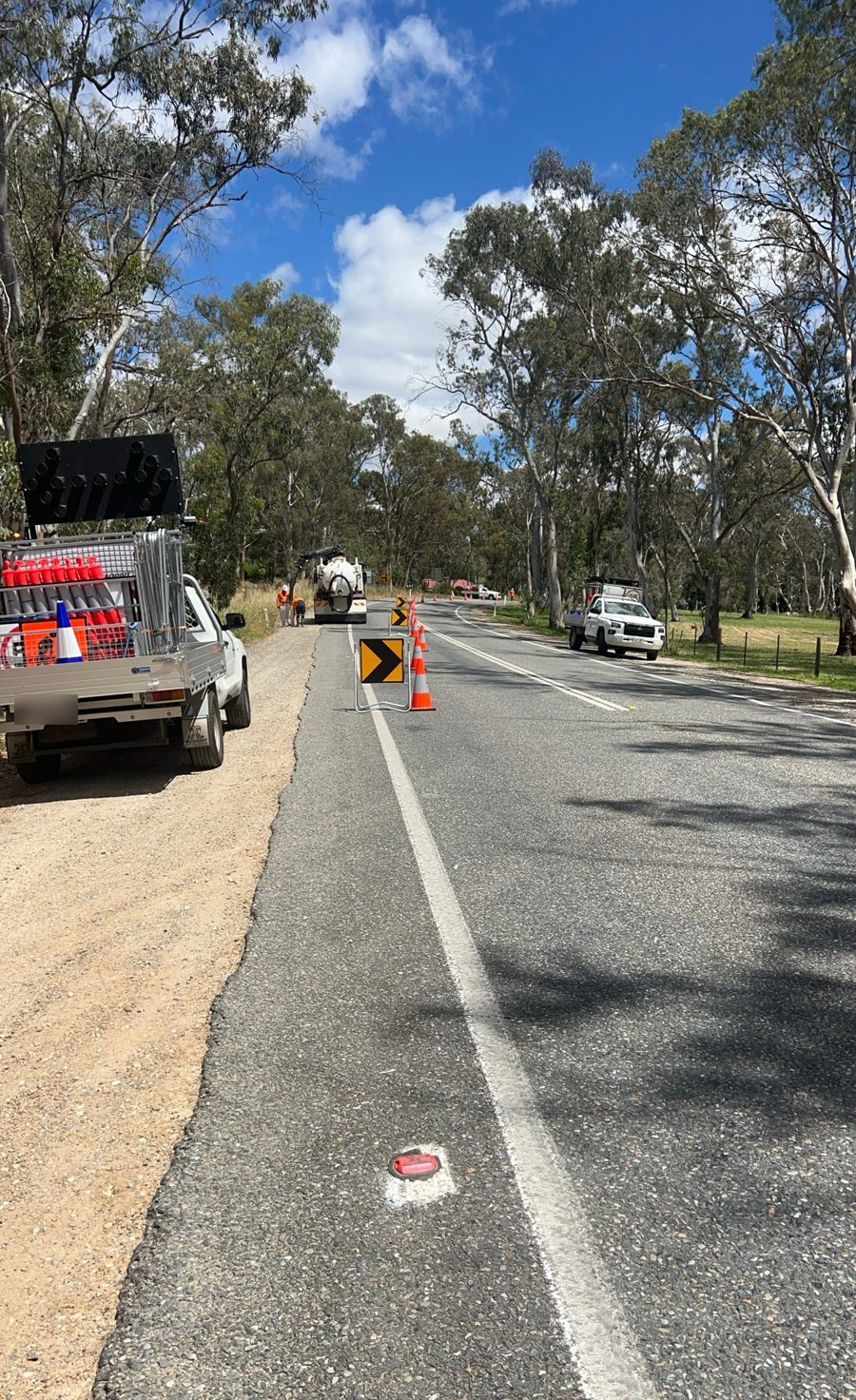
What a TGS shows
A TGS is a scaled layout of the work zone. A typical scheme shows:
- the work area and which lanes, shoulders, footpaths or bike lanes it takes up
- every advance warning sign, in order, with its spacing from the work
- any reduced speed limit and where it starts and ends
- cone tapers, delineation and barriers
- where traffic controllers stand, if stop/slow or portable signals are used
- how pedestrians and cyclists are kept safe or diverted
- detour routes, if a road is closed
The scheme has to suit the real road: its speed, its width, how far ahead drivers can see, and what traffic uses it. A layout that works on a 50 km/h suburban street will not work on a 100 km/h country road, where signs need to be further apart and buffer zones longer.
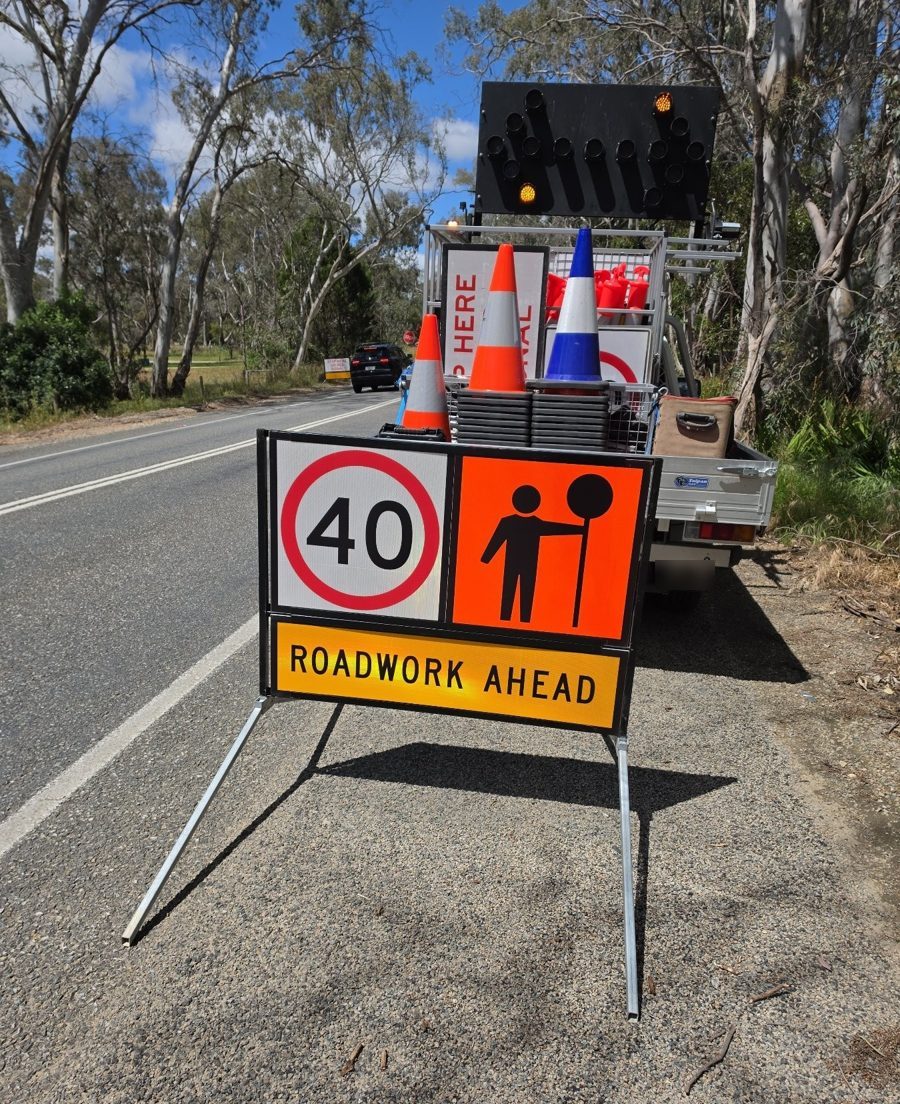
When you need one
If your work changes how traffic or pedestrians use a road or footpath, you will normally need a TGS. That covers lane closures, road closures, stop/slow, work on the shoulder or verge beside traffic, and footpath works. Bigger or longer jobs usually also need a Traffic Management Plan.
Who approves it depends on the road. State-managed roads are permitted through the Department for Infrastructure and Transport (DIT); council roads go through the local council. The permit, TMP and TGS must be available on site while the work is going on.
Very short jobs can be different. Under Regulation 4A, short-term low impact works that occupy a road for no more than 20 minutes, and meet Section 8.2 of the SA Standards for Workzone Traffic Management, do not need a DIT permit on prescribed roads. Whether a job really qualifies should be decided before anyone goes to site.
TGS or TMP?
The two get mixed up. A TGS is the layout drawing for the work zone. A TMP is the wider plan for the whole job, covering how traffic, pedestrians and the work are managed from start to finish. Small, short jobs often only need a scheme. If your principal contractor or the road authority has asked for one or the other and you are not sure which fits, send us what you have been given.
Who prepares it
Instaquipt prepares traffic guidance schemes in-house under SA Traffic Management Designer licence 184-959. Because we also supply the traffic control crews, the scheme we draw is the scheme our people set up on the day. See our traffic management plans and TGS design service, or read our Williamstown Road job story for a scheme on a 100 km/h road.
Who can design a TGS in South Australia?
Until 2024, South Australia had no specific qualification for the people who design traffic management plans and schemes. That has changed. Under the national framework set by Austroads, there are now three designer qualifications, one for each road category:
- TMD 1 (Traffic Management Designer 1) covers Category 1 roads, the urban streets and low volume rural roads where most work happens.
- TMD 2 covers Category 2, the high volume roads.
- TMD 3 covers Category 3, the motorways and freeways.
TMD 1 comes first: you need it before you can enrol in TMD 2 or TMD 3. DIT says designers can only work on the road categories they are approved for. Existing designers have until 1 February 2027 to get the new qualification, through Recognition of Prior Learning or the full course. To lodge a scheme with a DIT permit application, the applicant also needs a current workzone traffic management card to use the Roadworks portal.
DIT publishes maps of which SA roads fall in which category. Before you accept a scheme, check that the designer is qualified for the category of your road. Ask us if you are not sure.
More on the deadline in our guide to the 2027 qualifications change, and on lodging permits in how to get a DIT roadworks permit.
What we need to prepare one
- the site address and the exact extent of the work
- what work is being done, and what plant or vehicles will be on site
- which lanes, shoulders, footpaths or bike lanes are affected
- the dates and shift times
Send the details through the enquiry form and we will come back to you with a price.
Questions
What does TGS stand for?
TGS stands for Traffic Guidance Scheme. It is the drawing that shows how traffic, cyclists and pedestrians will be guided safely past a work site.
When do I need a TGS in South Australia?
If your work changes how traffic or pedestrians use a road or footpath, you will normally need a TGS. Work on state-managed roads needs a DIT permit, and work on council roads goes through the local council. The TGS must be available on site while the work is under way.
What is the difference between a TGS and a TMP?
A TGS is the layout drawing for the work zone. A Traffic Management Plan (TMP) is the wider document covering how traffic and the work are managed over the life of the job, and usually includes or refers to the schemes it relies on.
Who can design a TGS in South Australia?
A TGS should be drawn by a qualified traffic management designer. Under the national framework, TMD 1 covers Category 1 roads, TMD 2 Category 2 and TMD 3 Category 3, and a designer can only work on the categories they are approved for. Instaquipt prepares schemes in-house under SA Traffic Management Designer licence 184-959.
General guidance based on the SA Standards for Workzone Traffic Management (version 8, February 2026) and the DIT Quick Guide to the SA temporary traffic management qualifications (read 8 November 2026). Rules change, so check the current standard or ask us about your job. More answers on our traffic management questions page.